Over the last few years, the growth of digital currencies has increased rapidly resulting in a fast growing list of used cases for digital tokens. Many Blockchain-based initiatives are coming up all over the world, each claiming to be the next innovation tool by issuing digital tokens with the purpose of increasing user adoption and usage of the tokens, as well as promoting the use of certain blockchain platforms.
Tokenomics is made up of two words: token and economics. It's the term for the branch of research that studies and designs economic systems based on blockchain technology. In 1972, Harvard psychologist B.F. Skinner was the first to propose this concept. He believed that by using a token economic paradigm, he could control people's behavior. Giving some unit of recognizable value would incentivize positive actions and vice versa. This concept's foundation is to convince users or project investors that the project's token may be used to construct a sustainable economy. To put it another way, Tokenomics takes central bank monetary policy and applies it to blockchain networks.
Tokenization is the process of converting physical ( and non-physical) assets into digital tokens on a blockchain.Traditional finance companies implement tokenization to protect confidential information such as financial statements, credit card number and other personally identifiable information.
According to the article published in xperts league “The Tokenomics phenomenon”- Tokenomics is the science of the token economy, allowing the creation of sustainable economic systems in that sense the blockchain technology there allowing that these ecosystems could develop with different use cases. It covers all aspects involving a coin´s creation management, and sometimes removal from a network. The ecosystem where everything is hanging up by different interactions with these tokens in this manner the ecosystem is built exclusively by tokens that represent real assets.
But before understanding the concept of Tokenomics, we should be clear about What a token is?
Token
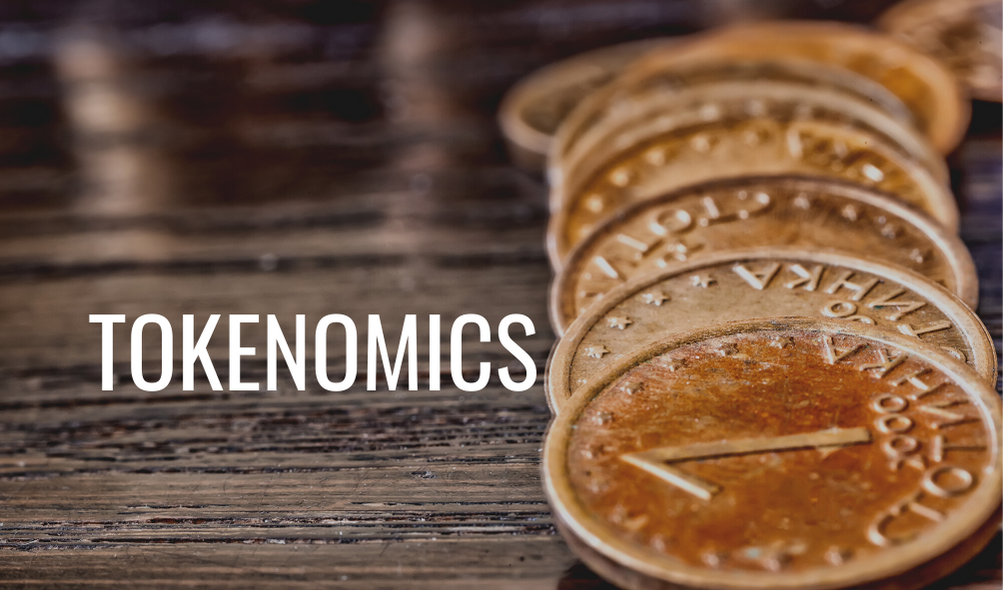
Token is a piece of data that stands for something more valuable. Token is often called valueless but it can be well put as a replacement. Anything that is visible and countable can be used as a token. Tokens should have a pleasing appearance, be easy to carry and distribute, and be difficult to counterfeit.Poker chips, stickers, point tallies, and play money are all common items used as a token. When a person exhibits desirable behavior, he or she is immediately rewarded with a set quantity of tokens. Tokens have no intrinsic value. They're gathered and then traded for useful items, privileges, or activities. Individuals can also lose tokens (reaction cost) if they engage in inappropriate behavior.
With the use of token and token economies by the international corporations, there has been a paradigm shift in the monetary policies all around the world as individuals have the ability to establish their own micro-economies. But in the context of Nepal, there is no such practice of using tokens as a substitute of currency. Rahat, which is a relief distribution aid platform uses the blockchain- based tokens for transparency. Rahat is inspired by the idea of bringing in quick relief with minimum overhead costs to counter the plight of countries like Nepal. Rahat hopes to plug leakages in aid distribution, involve local communities to build financial resilience, and tap into support for unbanked populations efficiently as it uses mobile-based blockchain tokens to manage and monitor the flow of aid transactions. Likewise, some of the examples of tokenomics in action are Bitcoin, Ethereum, Tron etc.
Importance of Tokenomics
Projects can follow a number of different approaches. Blockchain technology can be used to create micro-economies in projects. They need to figure out how tokens should work within their ecosystem to become self-sustaining. Each project's core team creates their own rules for how tokens are created, as well as how they are injected into and removed from the network.
When it comes to tokens, there is no such thing as a "one size fits all" mindset. Blockchain has opened the door to a wide range of applications and implementations. Tokenomics allows teams to design a new model or adapt an existing one that fits the project's goals. If done correctly, this can result in a well-functioning and stable platform.
Conclusion
Around the world, there are a lot of projects being carried out to create the micro-economics. But the principles and the models that drive tokens, currencies, and the initiatives that support them are still in its early stages of figuring out what really works.
There are a lot of models that aren't going to work, and we expect those initiatives to fade away. Those who succeed, on the other hand, will continue to inspire and influence future efforts.
https://decrypt.co/resources/tokenomics
https://www.xpertsleague.com/the-tokenomics-phenomenon/